 The Golden Typewriter
Ian Fleming: biography, books and how he died
Ian Fleming was a British journalist and former naval intelligence officer who created James Bond. He began the first Bond novel at Goldeneye, his house in Jamaica, in 1952, and wrote Bond books until his death in 1964.
Early life
Ian Lancaster Fleming was born in London on 28 May 1908. His father, Valentine, a Member of Parliament, was killed in the First World War. Fleming went to Eton and then studied languages in continental Europe.
He worked as a journalist for Reuters and spent a short time as a stockbroker in the City.
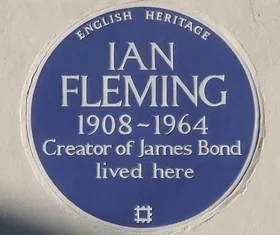
Fleming lived at 22 Ebury Street in London. An English Heritage blue plaque marks his former residence, as recorded by English Heritage.

Naval intelligence
During the Second World War he was assistant to Admiral John Godfrey, the Director of Naval Intelligence. The job put him close to secret planning and to the people who ran wartime operations. The novels draw on that world for atmosphere and detail; they are invented stories, not accounts of real missions.
Journalism and Jamaica
After the war he joined Kemsley Newspapers as foreign manager of The Sunday Times, running its overseas correspondents in the early Cold War. Travel and reporting sharpened his eye for specialist detail: cards, golf, cars, food and surveillance all turn up in the books.
In 1946 he bought land at Oracabessa Bay in Jamaica and built a house there, Goldeneye. He began Casino Royale at Goldeneye in February 1952, and it came out the following April.
A book a year
From then on he wrote roughly one Bond book a year. Bond's job let him move freely between crime, Cold War rivalry and pure escapism, and he sometimes pushed against his own formula: The Spy Who Loved Me is told by a young woman, not by Bond. His reporting produced two books of non-fiction, The Diamond Smugglers and Thrilling Cities.
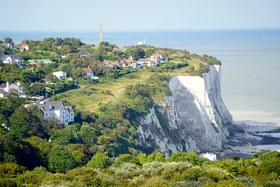
Fleming also had a weekend and holiday home at St Margaret’s Bay in Kent. Visit Kent identifies it as White Cliffs, which he bought from Noël Coward in 1952.

Last years
After a heart attack in 1961 he wrote Chitty Chitty Bang Bang, based on bedtime stories he told his son, Caspar. He saw Dr. No reach cinemas in 1962, with Sean Connery as Bond. He died of heart failure on 12 August 1964, aged 56. His children's book, his last novel and his last collection were all published after his death.
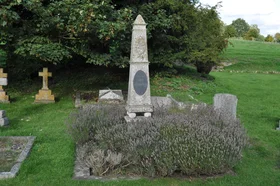
Fleming is buried at Sevenhampton near Swindon, in Wiltshire. Sevenhampton Parish in Gloucestershire explains that its namesake village is not his burial place.

His reputation
Ian Fleming Publications says the Bond books have sold more than 100 million copies; that is the publisher's figure, not an independent count. It also records admiration from Raymond Chandler, and says President John F. Kennedy was a well-known reader of From Russia with Love.
Timeline
| 28 May 1908 | Born in London. |
|---|---|
| 1946 | Buys land at Oracabessa Bay, Jamaica, and builds Goldeneye. |
| February 1952 | Begins writing Casino Royale at Goldeneye. |
| 13 April 1953 | Jonathan Cape publishes Casino Royale. |
| 1957 | From Russia with Love and The Diamond Smugglers published. |
| 1960 | For Your Eyes Only, the first story collection. |
| 1961 | Suffers a heart attack; writes Chitty Chitty Bang Bang. |
| 1962 | The first Bond film, Dr. No, is released. |
| 1963 | On Her Majesty's Secret Service and Thrilling Cities published. |
| 12 August 1964 | Dies of heart failure, aged 56. |
| 1964 to 1966 | Chitty Chitty Bang Bang, The Man with the Golden Gun and Octopussy and The Living Daylights appear after his death. |
Places connected with Fleming
You can see his blue plaque in Belgravia, visit his grave in Wiltshire, and stay at Goldeneye, now a resort.
Who looks after his work now
Ian Fleming Publications and the Ian Fleming Estate look after the rights to his books. This site is independent and has no connection with either.
Ian Lancaster Fleming: the man before the novelist
Ian Lancaster Fleming was born in Mayfair, London, on 28 May 1908. His parents were Valentine Fleming and Evelyn Fleming, née Rose, and his elder brother Peter became a travel writer. Valentine served as an MP and was killed on the Western Front in 1917. These family circumstances place Fleming in a world of financial security, public service and wartime loss before his own intelligence career began. They also warn against reading his childhood backwards through the later success of James Bond: he did not begin life as the creator of a ready-made cultural institution.
For a reader approaching his biography, the useful question is how those circumstances changed as he moved between education, employment, war and writing. His full name matters mainly as a way of identifying the historical person accurately; the books were published under Ian Fleming. Our family guide separates the people in that history from the fictional family relationships he later invented for Bond.
Eton, languages and an unsettled early career
Fleming attended Eton, spent a short period at Sandhurst and studied languages in continental Europe. His education was followed by work at Reuters, then banking and stockbroking. Ian Fleming Publications describes this sequence in its biographical material, rather than presenting an uninterrupted march towards literary fame. It is an important distinction: journalism and finance were real stages of his working life, and the novelist emerged considerably later.
Language study, reporting and the handling of information make a useful starting point for thinking about the books. A thriller writer has to establish a place quickly, decide which details a reader needs and keep a complicated situation understandable. That is our reading of the connection, rather than a claim that every sentence in Bond can be traced to a particular job. Readers interested in Fleming's descriptive voice should try the non-fiction alongside the novels; the change of genre makes the habits of observation easier to notice.
Was Ian Fleming a spy? What the naval job involved
Fleming worked in British naval intelligence during the Second World War. Admiral John Godfrey recruited him as his personal assistant, and he served in the Royal Naval Volunteer Reserve. The National WWII Museum describes liaison, drafting and planning as important parts of his work. He helped intelligence departments communicate and was involved in plans for obtaining enemy information. Calling him an intelligence officer is more precise than imagining him as a field agent carrying out Bond's missions.
The distinction does not make the job insignificant. Intelligence work depends on organisation, access and judgement as well as the hazardous collection of information. It also puts a useful boundary around the familiar question of whether Fleming 'was Bond'. A novelist can use professional knowledge without reproducing his own activities as a plot. Our war-years guide looks more closely at what the records support and why fictional adventures should not be used as evidence of personal wartime exploits.
30 Assault Unit: intelligence as a practical objective
Fleming helped develop 30 Assault Unit, a wartime force whose purpose included capturing enemy documents and technical information. Ian Fleming Publications' historical account describes naval intelligence personnel and Royal Marine Commandos being brought together for this work. The objective was not simply to destroy an enemy position: material surviving inside it could be valuable to analysts elsewhere. That gives the unit a different purpose from the ordinary image of a commando raid.
It is tempting to turn every part of this history into a direct prototype for a Bond adventure. A more useful approach is to notice the underlying problem: how do you recognise valuable information, secure it and get it to the people who can interpret it? That question belongs to the world of intelligence rather than a particular fictional hero. Fleming's involvement deserves attention on its own terms. It should not be inflated into a claim that he personally led the unit's raids, nor reduced to a colourful anecdote added to an author's life.
Operation Goldeneye and the limits of the Bond analogy
Operation Goldeneye was a wartime plan associated with Fleming's naval intelligence work, concerned with maintaining intelligence arrangements around Spain and Gibraltar if the strategic situation deteriorated. The historical account of the operation records his visit to Gibraltar in 1941 and the work on secure communications. Its name later became associated with his Jamaican home, but the wartime operation and the house are different subjects.
For a modern reader, this is a useful example of how a familiar Bond-related name can conceal several histories. A book title, a house name and a military codename should not automatically be treated as the same thing. The operation also illustrates the less spectacular side of intelligence: routes, communications and contingency planning. A reliable account needs to explain the intended purpose of a plan and distinguish that intention from what eventually happened. The same discipline helps when evaluating claims that an abandoned wartime scheme was somehow a successful real-life version of a later fictional mission.
Ann Fleming and Caspar
Fleming married Ann in 1952. She was born Anne Geraldine Mary Charteris and had previously been married to Lord O'Neill and Lord Rothermere; accounts therefore use several surnames and titles for the same woman. Ian and Ann's son Caspar was born in the same year as their marriage. When a biography refers to Ann Charteris, Ann Rothermere or Ann Fleming, the surrounding date is essential to understanding the reference.
These are relationships between historical people, rather than clues that need to be fitted into a Bond plot. A family guide can clarify names and chronology without claiming that a fictional woman is simply a disguised version of the author's wife. It is also worth separating Ian's children from Ann's children across her marriages. The short answer about Ian is that Caspar was his only surviving child. Our Fleming family page provides the fuller context and keeps the different generations and relationships distinct.
Goldeneye: a home that became a writing place
Goldeneye was Fleming's home on Jamaica's north coast, near Oracabessa. He bought land there in 1946 and built a house overlooking the sea. It became the place where he wrote the Bond stories, beginning with Casino Royale in 1952. The house is therefore central to the history of the books, although its subsequent life as part of a resort is a separate chapter from Fleming's own residence.
The attraction for a reader is the relationship between routine and location. It is easy to concentrate on the exotic setting and overlook the ordinary work of producing a manuscript. A house associated with a famous author can become a symbol, but the writing still requires decisions about pace, characters and revision. When we discuss Goldeneye, we distinguish the documented location from our interpretation of its literary significance. The Jamaican setting is especially helpful when reading Fleming's landscapes: a place can be both an environment he knew and a setting transformed by the needs of fiction.
Jamaica beyond the writing desk
Matthew Parker's Goldeneye examines Fleming's Jamaican life within the island's wider history. The publisher's description emphasises the relationship between the privileged social world around Fleming and the movement towards self-government outside it. That context matters when reading a writer whose adventures repeatedly send a British agent overseas. The landscape is not simply decorative scenery, and Fleming's perspective is not the only possible way to understand the places he describes.
Our recommendation is to read a Bond novel and then compare its treatment of place with a biography or historical account. Ask who is allowed to act, who is described from the outside and which assumptions the narrative treats as ordinary. This is an editorial way into the books. It allows enjoyment of the descriptive writing alongside a critical view of its period attitudes. Our guide to Parker's book explains why it complements a full-life biography.
From journalist to author of Casino Royale
After the war, Fleming returned to newspaper work, becoming foreign manager within Kemsley Newspapers and The Sunday Times. He wrote Casino Royale at Goldeneye in 1952; its publication in 1953 introduced James Bond to readers. Ian Fleming Publications places the novel within a life that already included reporting, travel and wartime intelligence. The book came after those experiences, rather than at the beginning of his adult career.
For someone new to Fleming, Casino Royale is still the clearest way to meet the character on the page. It lets you establish the literary Bond before comparing later adventures or screen adaptations. Our guides distinguish publication order from story chronology because those answer different questions. Publication order shows how Fleming's writing developed; a proposed story order tries to arrange the events inside the fiction. Biography helps with the first question, but it cannot resolve every inconsistency in an invented character's timeline.
The Diamond Smugglers: Fleming writing about real investigations
The Diamond Smugglers was published by Jonathan Cape in 1957. Fleming based the book on interviews with John Collard, who had worked for the International Diamond Security Organisation. It grew out of newspaper articles and concerns the organisation's efforts against diamond smuggling. It is non-fiction, even though the combination of international crime, secrecy and valuable stones naturally recalls the interests of the Bond novels.
This makes it a particularly useful companion to the fiction. The reader can ask how Fleming presents a real operation when he cannot simply invent whatever makes the most effective climax. Sources and institutional interests matter differently in reportage. An investigation related by a participant is not the same thing as an all-knowing narrator revealing a villain's intentions. Our Diamond Smugglers guide explains the subject and format; read it as a separate work of reporting rather than an extra mission silently added to Bond's adventures.
Thrilling Cities: the travel writer beside the thriller writer
Thrilling Cities, published in 1963, collects Fleming's travel writing. The material originated in journeys made for The Sunday Times, and the book takes readers through a range of cities rather than following James Bond on a mission. Its importance within his bibliography is straightforward: it gives direct access to a non-fiction voice that shares interests with the novels while working within a different kind of book.
We suggest looking at the difference between describing a city and making it serve a plot. In a novel, a location may have to create danger, delay a pursuit or isolate a character. Travel writing can stop to discuss something that would interrupt that momentum. Those differences make comparison rewarding, particularly if you like the food, hotels and atmosphere in Bond but want to see Fleming without the machinery of a thriller. The Thrilling Cities guide helps distinguish this travel collection from the Bond short stories and other later compilations.
Chitty Chitty Bang Bang and the other Fleming
Fleming also wrote Chitty Chitty Bang Bang, a children's adventure about a remarkable car and the Pott family. It was first published in 1964 with illustrations by John Burningham. The book belongs in a bibliography of Fleming's work even if the reader has come to him through 007. Its presence is a reminder that an author's best-known series does not define every book he wrote.
It is worth approaching the novel without assuming that the familiar film supplies its plot. Adaptation can preserve a name or premise while rebuilding an adventure, and that applies to a family story as much as a spy thriller. Our Chitty Chitty Bang Bang guide introduces Commander Caractacus Pott and his family and explains the differences. Readers who want Fleming's full bibliography should include the children's book and the two non-fiction works, rather than counting only the novels whose protagonist is Bond.
How Ian Fleming died, and what followed
Ian Fleming died on 12 August 1964, aged 56. Ian Fleming Publications describes his death as heart failure; biographical accounts also describe the heart attack and underlying heart disease. Those descriptions should not become a sensational claim about a mysterious death. The date and age are well established, and the important biographical point is that his writing career ended while Bond's popularity was still growing.
His death also helps explain why publication dates cannot always be treated as the dates when he completed a book. Material can appear after an author's death, and later editions may collect or rearrange work already written. Readers looking at the last Bond books should check the publication history instead of assuming that Fleming supervised every published version. The photograph of his grave on this page is a record of a real place, with its photographer and licence credited in the caption; it is distinct from the site's labelled imaginative book illustrations.
How to read a Fleming biography critically
Nicholas Shakespeare's Ian Fleming: The Complete Man uses access to family papers to reconsider the author's life. Penguin describes it as an account that connects his personal history with naval intelligence and the development of his fiction. For readers, the value of a substantial biography lies in the evidence and the relationships it can explain, rather than a promise to identify one real person behind every fictional character.
Our approach is to separate established facts, an author's interpretation and our own reading advice. A date of birth can be checked; an explanation of a novelist's motivation usually requires a more cautious argument. When accounts disagree, look at their sources and ask whether new documents have changed the picture. The books about Fleming hub offers several approaches: a full-life biography, an account of Jamaica and a collection of letters. Reading across those formats gives a more rounded understanding than treating a single memorable anecdote as the whole life.
Frequently asked questions
When was Ian Fleming born?
Ian Lancaster Fleming was born on 28 May 1908 in London. His birthplace was Mayfair.
When and how did Ian Fleming die?
He died on 12 August 1964. Ian Fleming Publications describes his death as heart failure; biographical accounts describe a heart attack and complications of heart disease.
How old was Ian Fleming when he died?
Fleming was 56. He had celebrated his birthday in May 1964 and died that August.
Was Ian Fleming a spy?
He was a naval intelligence officer during the Second World War. It is more accurate to describe his documented work in intelligence planning and liaison than to portray him as a field agent carrying out James Bond's adventures.
What did Ian Fleming do in the navy in WW2?
He served as assistant to Admiral John Godfrey, the Director of Naval Intelligence, and worked on intelligence plans and liaison. His work included involvement with 30 Assault Unit and Operation Goldeneye.
Did Ian Fleming go to Eton?
Yes. He was educated at Eton College, before a short period at Sandhurst and further language study in Europe.
Who was Ian Fleming's wife?
His wife was Ann Fleming, born Anne Geraldine Mary Charteris. They married in 1952; she had previously been married to Lord O'Neill and Lord Rothermere.
Did Ian Fleming have children?
Ian and Ann Fleming had a son, Caspar, born in 1952. Caspar was Ian's only surviving child. Ian and Ann’s daughter Mary was stillborn in 1948.
What was Ian Fleming's full name?
His full name was Ian Lancaster Fleming. The books were published under Ian Fleming.
How many books did Ian Fleming write?
His core bibliography comprises 17 books: 14 James Bond books, Chitty Chitty Bang Bang and the two non-fiction books The Diamond Smugglers and Thrilling Cities. The Bond set contains 12 novels and two short-story collections. Later collections of his writing, such as Talk of the Devil, are separate from that original count.
Related reading guides
Sources (17)
- English Heritage: Ian Fleming blue plaquePublisher
- Christie’s: Fleming’s gold-plated typewriterPublisher
- Visit Kent: James Bond’s KentPublisher
- Ian Fleming Publications: Meet the manOfficial Fleming site
- Ian Fleming Publications: author pageOfficial Fleming site
- Ian Fleming Publications: bibliographyOfficial Fleming site
- Wikipedia: Ian FlemingSource
- Wikipedia: Ann FlemingSource
- Wikipedia: Goldeneye estateSource
- Wikipedia: Operation GoldeneyeSource
- Ian Fleming Publications: Ian Fleming historical articlesSource
- National WWII Museum: Secret Agents, Secret ArmiesSource
- Penguin: Goldeneye by Matthew ParkerSource
- Penguin: Ian Fleming, The Complete ManSource
- Wikipedia: The Diamond SmugglersSource
- Wikipedia: Thrilling CitiesSource
- Wikipedia: Chitty-Chitty-Bang-BangSource